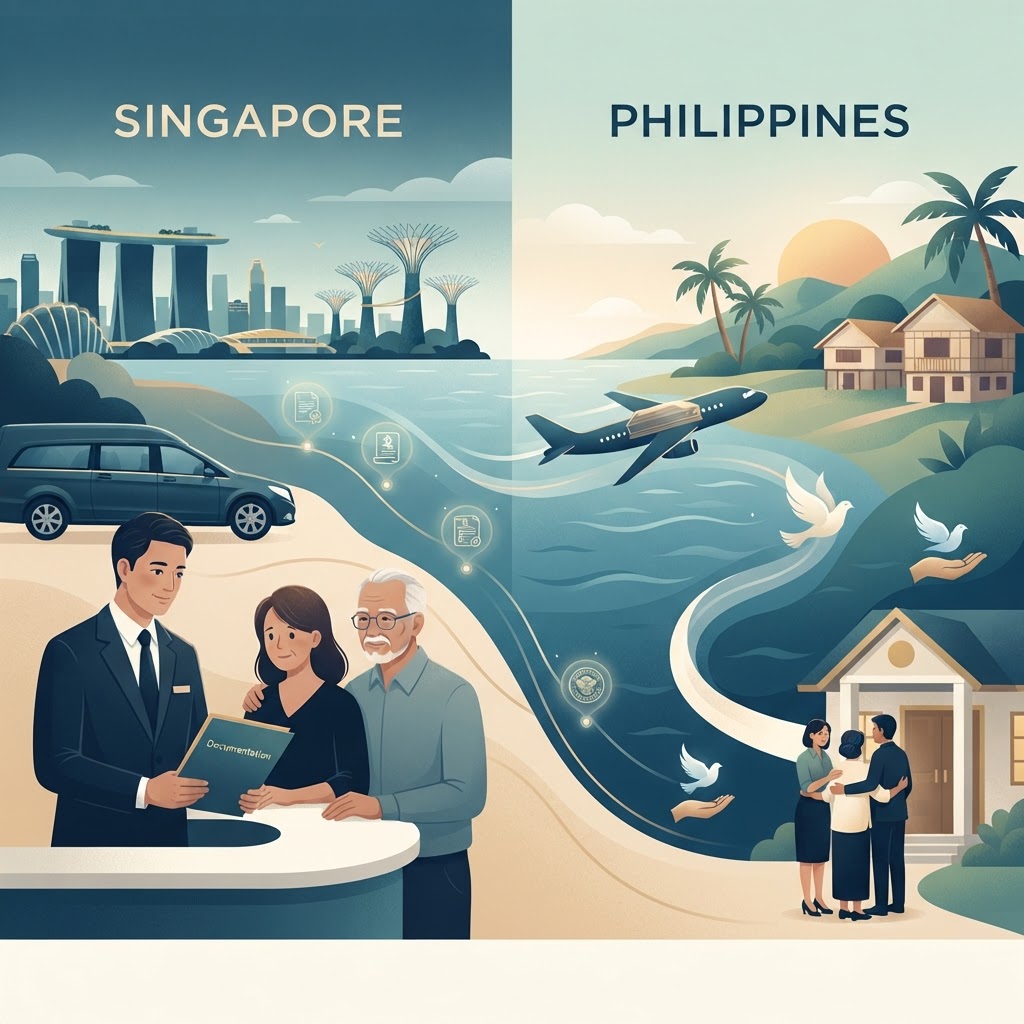
International Body Repatriation Process Singapore to Philippines: A Compassionate Step-by-Step Guide for Families
There are few phone calls in life that change everything in an instant.
A loved one passes away overseas, and amid the shock, one question rises almost immediately: How do we bring them home?
For many Filipino families in Singapore, this is not just a logistical matter—it is a deeply emotional journey. Home matters. Final goodbyes matter. Being reunited with family, community, and faith traditions matters.
At Eternal Horizon, we understand that the international body repatriation process Singapore to Philippines is about far more than paperwork and cargo arrangements. It is about dignity, precision, cultural sensitivity, and carrying a family through one of the hardest moments of their lives.
This guide explains what really happens, step by step, so you know what to expect and how professional support can make the process smoother.
Why Repatriation to the Philippines Is Usually Done by Air
One of the first things families ask is whether their loved one will travel by land or by air.
Here is the important distinction:
- West Malaysia repatriations are usually done by land transport, typically by refrigerated hearse.
- East Malaysia, Philippines, India, China, UK, Australia, and most overseas destinations are typically handled by air freight (HUM).
For the Philippines, repatriation from Singapore is generally arranged via air freight because it is an international overseas destination requiring airline, airport, and destination-country clearance.
In airline terminology, human remains are often handled under special cargo procedures, commonly referred to as HUM. This is a carefully controlled process with strict documentation, coffin preparation, and scheduling requirements.
The First 24 Hours: What Happens First?
In the earliest hours after a passing, families are often dealing with grief, calls from relatives, and urgent administrative questions at the same time.
This is usually how the process begins:
1. Immediate care and transfer
A funeral director arranges for the deceased to be brought into professional care as soon as possible. This ensures respectful handling and proper preservation while documentation is being prepared.
2. Registration of death in Singapore
The death must be properly registered in Singapore, and the relevant official documents must be obtained before international repatriation can proceed.
3. Coordination with the family and relevant authorities
The funeral director will confirm the destination in the Philippines, the family’s preferences, and the receiving funeral home or contact person at the destination, if any.
4. Flight and embassy/consular documentation planning
Because repatriation to the Philippines is by air, document preparation and airline acceptance planning begin early.
Step-by-Step: International Body Repatriation Process Singapore to Philippines
Below is the typical process families can expect.
Step 1: Collection of essential documents
While requirements can vary depending on the circumstances of death, the airline, and the receiving location in the Philippines, commonly required documents may include:
- Death certificate or official death registration documents
- Embalming certificate
- Coffin sealing certificate, where required
- Passport or identification documents of the deceased
- Export permit or relevant Singapore clearance documents
- Consular or embassy-related documents, if required
- Import clearance or receiving-party documentation in the Philippines, where applicable
A professional repatriation provider helps check which documents are needed for the specific case and destination.
Step 2: Preparation of the deceased for international transport
For air repatriation, preparation must meet airline and destination-country requirements. This typically includes:
- Professional embalming
- Sanitary and secure preparation for overseas transport
- Placement into an approved coffin or air-tray arrangement, depending on airline and route requirements
- Sealing and documentation for carriage
This stage is handled with great care because compliance is essential for smooth acceptance by the airline.
Step 3: Choosing a suitable coffin for air freight
This is a detail many families do not initially realize, but it can make a significant difference.
Because air freight charges are generally calculated based on overall weight, the choice of coffin affects the total transportation cost.
Families may choose:
- A simple, lighter coffin for the flight from Singapore to the Philippines to reduce air freight weight
- A different coffin or ceremonial casket after arrival in the Philippines, if they prefer a different presentation for the wake or funeral
This is often a practical and cost-conscious option that still preserves dignity and care throughout the journey.
Step 4: Airline cargo booking and scheduling
Unlike ordinary passenger travel, human remains transportation must be booked under special cargo arrangements. The funeral director will typically coordinate:
- Airline cargo space
- Flight timing
- Cut-off times for cargo acceptance
- Airport documentation submission
- Coordination with the receiving side in the Philippines
This stage requires precision because a missing document or timing issue can delay departure.
Step 5: Transfer to airport and export clearance
Once the flight is confirmed and documents are in order, the coffin is transported to the airport under controlled arrangements. Export procedures are completed before the remains are accepted for loading.
Step 6: Arrival in the Philippines and local release
Upon arrival, the remains must be cleared by the relevant local authorities and released to the appointed receiving funeral home, service provider, or family representative.
Depending on the arrival airport and local procedures in the Philippines, this may involve:
- Document verification
- Customs or cargo release procedures
- Transfer to a local funeral home
- Movement onward to the final province or city
Typical Timeline: How Long Does It Take?
Every case is unique, but families often want a general sense of timing.
| Stage | What happens | Typical time range | |---|---|---| | Initial arrangements | Transfer into care, family consultation, first document checks | Same day | | Documentation & preparation | Death registration, embalming, coffin preparation, permit coordination | 1–3 days | | Airline booking & cargo acceptance | Flight confirmation, airport submission, export handling | 1–2 days | | Arrival & release in Philippines | Destination clearance and handover | Depends on airport and local receiving arrangements |
Important: Timelines can vary based on weekends, public holidays, flight availability, document completeness, and destination procedures in the Philippines.
What Determines the Cost of Repatriation?
Families naturally want clarity on cost, and it is important to be honest: there is no one-size-fits-all price.
A proper quotation usually depends on several factors, including:
- Location of the deceased in Singapore
- Type of professional care and preparation required
- Documentation and permit requirements
- Embassy or consular procedures, where applicable
- Coffin type and overall shipment weight
- Air freight charges, which are commonly based on overall weight
- Airline routing and destination airport in the Philippines
- Receiving arrangements and onward local transport after arrival
One useful way to manage cost is to ask about a lightweight coffin for the flight, especially for air freight cases such as the Philippines. Many families then arrange a different coffin locally after arrival if they wish.
A Practical Family Checklist
When emotions are running high, even simple tasks can feel heavy. This checklist can help:
Prepare these details if available
- Full name of the deceased
- Passport or ID details
- Place of death
- Contact details of next of kin
- Preferred destination city or province in the Philippines
- Preferred receiving funeral home or family contact in the Philippines
- Any religious or cultural requirements
Ask your repatriation provider
- What documents are required for this specific case?
- Is embalming required for this route?
- What coffin options are suitable for air freight?
- How is the air freight weight calculated?
- Who will receive the deceased in the Philippines?
- Are there likely delays due to weekends or public holidays?
Frequently Asked Questions
Is repatriation from Singapore to the Philippines done by air or land?
For the Philippines, repatriation is typically done by air freight (HUM), not land transport.
Can the family choose a simpler coffin for the flight?
Yes. Because air freight charges are usually based on overall weight, a simple, lightweight coffin can help reduce transport cost. A different coffin may be chosen after arrival in the Philippines.
How long does the process usually take?
It varies case by case. If documents, flight space, and destination arrangements move smoothly, the process may be completed within a few days, but delays can happen depending on official clearances and airline schedules.
Will a funeral director help with the paperwork?
Yes. A professional international repatriation team coordinates the documentation, preparation, airline arrangements, and communication with relevant parties.
In Moments Like This, Experience Matters
Repatriation is one of those services people rarely think about—until they need it urgently.
And when that moment comes, what families need most is not just transport. They need calm guidance. Clear answers. Respectful care. And a team that understands both the emotional weight and the international logistics involved.
At Eternal Horizon, we support families through the international body repatriation process Singapore to Philippines with professionalism, compassion, and round-the-clock coordination.
If you need immediate 24/7 assistance, contact Eternal Horizon on WhatsApp: +65 8111 1826.
We are here to help bring your loved one home—with dignity, care, and experience when it matters most.