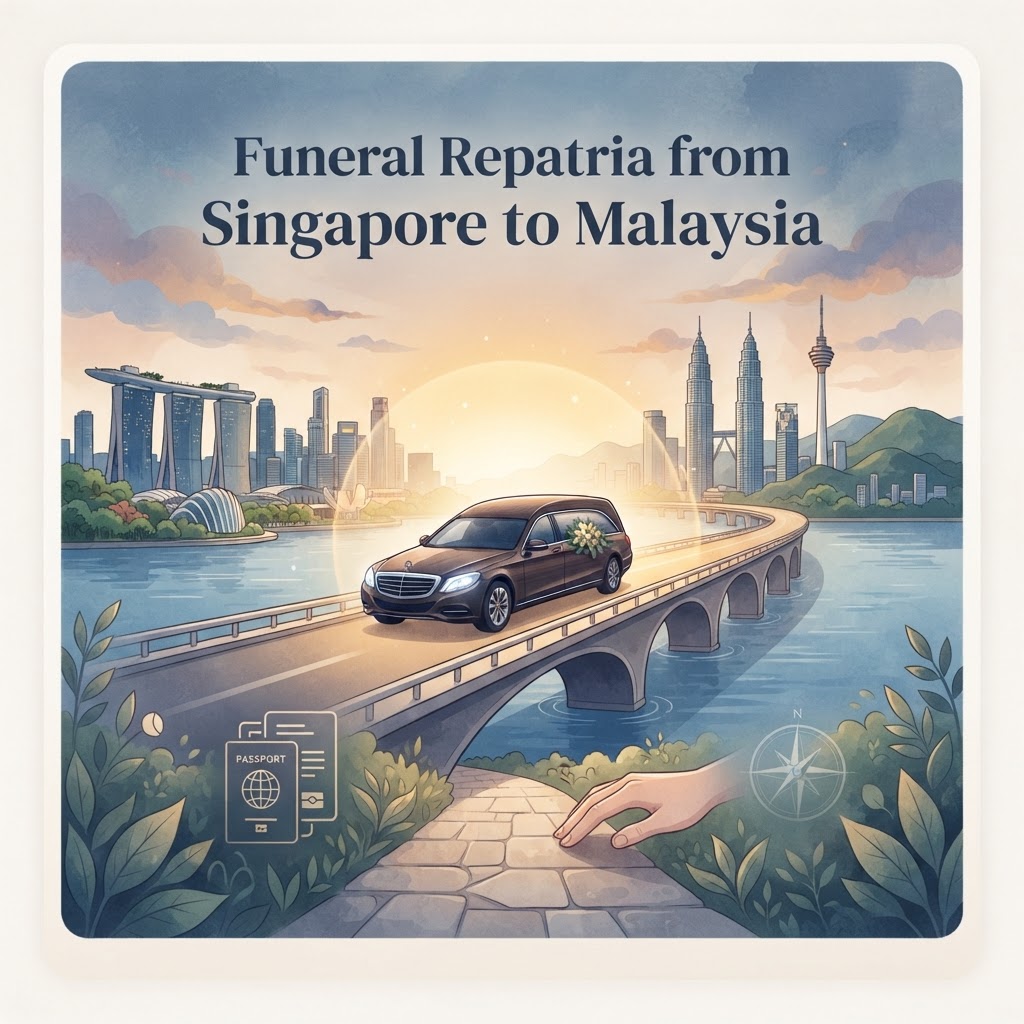
Cost of Funeral Repatriation from Singapore to Malaysia: What Families Really Pay For
When a loved one passes away away from home, time can suddenly feel strange. One moment, everything is ordinary. The next, a family is facing phone calls, documents, transport arrangements, and one deeply human question: How do we bring them home with dignity?
If you are searching for the cost of funeral repatriation from Singapore to Malaysia, you are likely looking for more than a number. You want clarity, honesty, and reassurance that every step will be handled properly.
At Eternal Horizon, we support families through this process with calm guidance, careful coordination, and 24/7 assistance. In this guide, we explain how funeral repatriation costs are calculated, what affects the final amount, and why each case is unique.
Why There Is No One-Size-Fits-All Price
One of the biggest misconceptions about repatriation is that there is a single fixed package price. In reality, the cost of funeral repatriation from Singapore to Malaysia depends on several moving parts.
For West Malaysia, repatriation from Singapore is usually done by land, using a refrigerated hearse. This is different from destinations such as East Malaysia, India, China, the Philippines, the UK, or Australia, where repatriation is typically arranged by air freight (HUM).
That distinction matters because the cost structure is very different.
For Singapore to West Malaysia: Land Repatriation Is Most Common
Because Singapore is connected to Peninsular Malaysia by land, the journey is generally more direct and logistically simpler than an international air shipment. However, the final cost still depends on:
- Distance to the final destination in Malaysia
- Type of vehicle required, typically a refrigerated hearse
- Documentation and permit processing
- Preparation of the deceased for cross-border transport
- Coffin or casket selected for transport
- Border and timing arrangements
- Whether additional rituals, viewing, or religious requirements are needed before departure
In other words, families are not simply paying for “transport.” They are paying for a carefully coordinated, lawful, respectful journey.
What Is Usually Included in Funeral Repatriation Arrangements?
A professional repatriation service is built around much more than moving from Point A to Point B. It includes the administrative, logistical, and human support needed to avoid delays and unnecessary distress.
Typical Cost Components
| Cost Component | What It Covers | |---|---| | Local collection and transfer | Bringing the deceased from home, hospital, hospice, or mortuary to the funeral facility | | Care and preparation | Essential care, embalming if required, dressing, and preparation for transportation | | Coffin or transport casket | The coffin selected for safe and dignified transfer | | Documentation | Death certificate handling, permits, consular or border documentation where applicable | | Repatriation coordination | Scheduling, cross-border communication, and timing arrangements | | Refrigerated hearse transport | Land transfer from Singapore into Malaysia and onward to the final destination | | Special requests | Religious rites, family viewing, ceremonial arrangements, or urgent dispatch |
Every family’s needs are different. A simple direct transfer to Johor will not involve the same logistics as a longer journey to Kuala Lumpur, Penang, Malacca, or another location further inland.
The Step-by-Step Process: What Families Can Expect
One of the most comforting things during a difficult time is knowing what happens next. Here is how the process typically unfolds.
1. Immediate Collection and Care
Once we are contacted, the first priority is the dignified transfer of the deceased from the place of passing. This may be a hospital, home, nursing facility, or other location.
2. Documentation Review
We verify all required documents before any cross-border movement takes place. Accuracy is crucial, because even a small discrepancy in names or identification details can cause delays.
3. Preparation for Repatriation
The deceased is prepared according to transport requirements, family wishes, and any religious or cultural considerations.
4. Coffin Selection
For land repatriation to Malaysia, the chosen coffin affects both presentation and transport arrangements. Families may choose according to practical, cultural, and ceremonial preferences.
5. Cross-Border Transport Arrangement
A refrigerated hearse is arranged for the journey from Singapore to the destination in West Malaysia. Route planning, timing, and border clearance are coordinated carefully.
6. Handover at Destination
Upon arrival, the deceased is received by the designated family members, funeral provider, or place of rest for funeral rites or final disposition.
Timeline at a Glance
While every case differs, this simple overview helps families understand the usual flow.
| Stage | What Happens | |---|---| | First call | Family contacts Eternal Horizon for immediate guidance | | Collection | Deceased is brought into our professional care | | Document processing | Required paperwork is checked and arranged | | Preparation | Care, dressing, and transport readiness | | Departure planning | Hearse scheduling and border coordination | | Repatriation journey | Transfer by land to West Malaysia | | Arrival | Handover for local funeral arrangements |
The exact timeline depends on documentation readiness, time of passing, border coordination, destination distance, and family preferences.
What Affects the Cost Most?
If you are comparing providers, it helps to understand the main cost drivers.
Distance and Final Destination
A transfer to a nearby Malaysian town is very different from a journey deep into another state. Longer routes generally require more time, fuel, coordination, and manpower.
Type of Transport
For West Malaysia, transport is generally by land in a refrigerated hearse.
For East Malaysia or overseas destinations such as India, China, the Philippines, the UK, or Australia, transport is typically by air freight (HUM) instead.
Documentation Complexity
Some cases are straightforward; others may involve more coordination depending on nationality, place of death, timing, and destination requirements.
Coffin Choice
The coffin selected can influence overall cost. For land transport, this is often based on family preference, tradition, and presentation.
Religious or Ceremonial Needs
If the family wishes to hold prayers, a wake, viewing, or specific rites before departure, this can affect the arrangement scope and cost.
Important Note About Air Freight Repatriation
Even though this article focuses on the cost of funeral repatriation from Singapore to Malaysia, many families also ask about other destinations.
Here is an important distinction:
- West Malaysia: usually land repatriation by refrigerated hearse
- East Malaysia: usually air freight (HUM)
- India, China, Philippines, UK, Australia, and many other countries: usually air freight (HUM)
For air freight cases, charges are commonly calculated based on overall weight. This is why families are often advised to consider a simple, lightweight coffin for the flight if they wish to manage costs more efficiently. If preferred, a different coffin can then be arranged after arrival at the destination for funeral services or final rites.
This is one of the most practical ways to reduce air repatriation cost without compromising dignity.
A Practical Checklist for Families
During the first call, it helps to have the following details ready if possible:
- Full name of the deceased
- Location of the deceased in Singapore
- Nationality and identification details
- Intended destination in Malaysia
- Religion or cultural requirements
- Whether the family wants direct transfer or local rites first
- Contact person at the destination
Do not worry if you do not have everything immediately. A professional team should be able to guide you step by step.
Frequently Asked Questions
Is repatriation from Singapore to Malaysia usually by air?
No. For West Malaysia, repatriation is usually by land, using a refrigerated hearse. Air freight is more commonly used for East Malaysia and other overseas destinations.
Why can’t there be a fixed published price?
Because each case differs in distance, documentation, coffin choice, preparation needs, timing, and ceremony requirements. Giving a single figure can be misleading.
How quickly can repatriation be arranged?
This depends on the required paperwork, timing of the death, destination, and family instructions. Prompt professional coordination helps avoid unnecessary delay.
Can the family choose different arrangements at the destination?
Yes. Especially for air freight cases, families may use a simple flight coffin and arrange a different coffin or funeral presentation after arrival.
Bringing Someone Home Is More Than a Logistics Task
At its heart, repatriation is not about paperwork, vehicles, or border procedures. It is about love, duty, and the quiet promise that someone will not be left far from home.
If you need help understanding the cost of funeral repatriation from Singapore to Malaysia, speak to a team that will explain the process clearly, handle the details carefully, and support your family with compassion.
Eternal Horizon is available 24/7 for immediate assistance.
Contact Us on WhatsApp
WhatsApp: +65 8111 1826
We are here to help you bring your loved one home with dignity, care, and peace of mind.