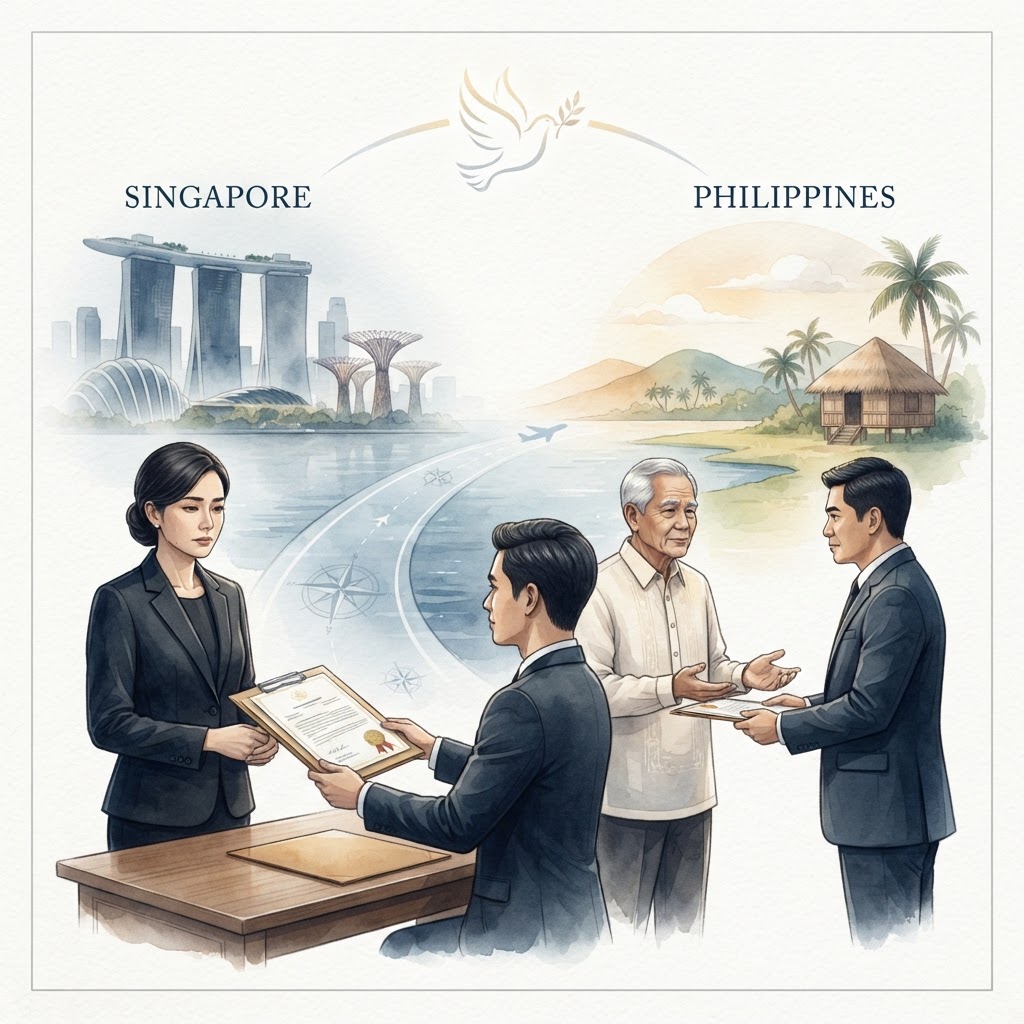
Documents Required for Transporting Deceased from Singapore to Philippines: A Compassionate Step-by-Step Guide
When a loved one passes away far from home, grief often arrives with a second burden: paperwork, approvals, airline requirements, embassy coordination, and urgent decisions that no family ever wants to make under pressure. For many Filipino families in Singapore, one question rises almost immediately: what are the documents required for transporting deceased from Singapore to Philippines?
The good news is this: while international repatriation can look overwhelming at first, the process becomes much more manageable when guided carefully and handled correctly from the start. At Eternal Horizon, we support families 24/7 with premium, professional funeral repatriation services from Singapore—always with dignity, clarity, and compassion.
In this guide, we will walk you through the essential documents, explain how air freight repatriation works for the Philippines, and show you what to expect step by step.
Why Repatriation to the Philippines Is Usually by Air
One of the most important things families should know is that repatriation method depends on the destination.
- West Malaysia: transport is usually by land, typically using a refrigerated hearse.
- East Malaysia, Philippines, India, China, UK, Australia, and similar destinations: transport is usually by air freight, commonly handled as HUM (Human Remains) cargo.
Because the Philippines is an international island destination, transporting a deceased person from Singapore to the Philippines is generally arranged by air. This means the documentation must satisfy:
- Singapore authorities
- Airline or cargo handling requirements
- Philippine receiving authorities
- In some cases, consular or embassy-related requirements
That is why careful document preparation matters so much.
The Core Documents Required for Transporting Deceased from Singapore to Philippines
While exact requirements can vary depending on the cause of death, the receiving city in the Philippines, airline procedures, and whether additional local permits are requested upon arrival, the following documents are typically central to the process.
1. Death Certificate
This is one of the most important documents in the entire repatriation journey. The death certificate issued in Singapore confirms the death officially and is required for multiple downstream steps, including permit applications and airline arrangements.
2. Permit to Bury/Cremate or Export-Related Clearance
For international repatriation, relevant Singapore permits or clearances are needed before human remains can be transported out of the country. The exact permit pathway may depend on the circumstances of death and the handling arrangements.
3. Embalming Certificate
For air transport, the deceased is generally required to be properly embalmed in accordance with international transport and public health requirements, unless otherwise governed by specific legal or medical circumstances. An embalming certificate confirms that this procedure has been completed.
4. Coffin Certificate or Sealing Certificate
Airlines and receiving authorities typically require confirmation that the deceased has been placed in a properly prepared coffin or casket suitable for air transport. This may include a certificate confirming sealing or coffin preparation according to cargo and health requirements.
5. Passport or Identification of the Deceased
The deceased's passport is often required for identification and repatriation documentation. If the passport is unavailable, alternative identification documents may sometimes be needed, subject to authority requirements.
6. Consular or Embassy Documentation (If Required)
Depending on the case, the Philippine Embassy or Consulate may require supporting documents or notifications before the remains are accepted for repatriation. Requirements can vary, so professional coordination is essential.
7. Air Waybill and Cargo Documentation
Because transport to the Philippines is usually by air freight (HUM), the shipment must be supported by airline cargo paperwork, including the air waybill and related cargo handling documents.
8. Receiving Funeral Director or Receiving Party Details in the Philippines
Authorities and airlines usually need confirmation of the person, funeral provider, or family representative receiving the deceased in the Philippines. Full receiving details help ensure smooth customs clearance and collection upon arrival.
Quick Checklist: Documents Families Commonly Need
| Document | Purpose | Usually Needed? | |---|---|---| | Singapore death certificate | Official registration of death | Yes | | Export/repatriation permit or clearance | Approval to transport remains out of Singapore | Yes | | Embalming certificate | Confirms embalming for air transport | Usually yes | | Coffin/sealing certificate | Confirms coffin is prepared for air shipment | Usually yes | | Deceased's passport/ID | Identity verification | Usually yes | | Consular/embassy documents | For cross-border acceptance/compliance | Sometimes | | Air waybill/cargo papers | Airline cargo shipment documentation | Yes | | Receiver details in the Philippines | For release and collection at destination | Yes |
Important: Document requirements can change depending on airline policy, local rules in the Philippines, and the circumstances of death. Families should always confirm the latest requirements through an experienced repatriation provider.
Step-by-Step: How the Repatriation Process Usually Works
Even though every family’s situation is unique, the journey often follows a similar path.
Step 1: Immediate Care and Collection
Once the family contacts a funeral repatriation team, arrangements are made for the dignified care and transfer of the deceased into professional custody.
Step 2: Registration and Document Review
We review the death registration documents, identification, and case details to determine exactly which permits and supporting papers are required.
Step 3: Embalming and Preparation for Air Transport
For the Philippines, repatriation is typically via air freight (HUM). The deceased is usually embalmed and prepared for flight in a coffin suitable for cargo acceptance and international transport.
Step 4: Permit and Airline Coordination
Applications are made for the necessary transport clearances, and flight space is coordinated with the airline or cargo carrier.
Step 5: Handover to Air Cargo
Once all paperwork is ready, the coffin is transferred for export handling and loaded according to cargo scheduling and airline acceptance procedures.
Step 6: Arrival and Release in the Philippines
At the destination, the receiving party or appointed funeral provider completes local clearance, receives the deceased, and proceeds with final funeral arrangements.
Typical Timeline at a Glance
| Stage | What Happens | Typical Consideration | |---|---|---| | Day 1 | Initial contact, transfer into care, case review | Timing depends on place and circumstances of death | | Day 1–2 | Documentation, embalming, coffin preparation | Subject to completion of required papers | | Day 2–3 | Airline booking and cargo acceptance | Depends on available flights and airline approval | | Arrival | Clearance and collection in the Philippines | Depends on local receiving procedures |
Please note: Timelines are not guaranteed. Delays can happen due to public holidays, flight space, incomplete documents, or additional authority requirements.
How Air Freight Costs Are Calculated for Repatriation to the Philippines
Families naturally ask about cost, especially when arranging urgent international transport. It is important not to rely on oversimplified estimates, because every repatriation case is different.
For destinations such as the Philippines, India, China, UK, and Australia, transport is generally by air freight (HUM), and air freight charges are commonly influenced by factors such as:
- Overall shipment weight
- Coffin or casket weight
- Dimensions and cargo handling requirements
- Airline routing and flight availability
- Preparation and documentation required
- Destination procedures and receiving arrangements
A Practical Way Families Can Save on Air Freight
Because air freight cost is often affected by overall weight, families may choose a simple, lightweight coffin for the flight from Singapore. This can help reduce air cargo costs significantly in some cases.
If the family prefers, they may then change to a different coffin upon arrival in the Philippines for viewing, burial, or local funeral traditions.
This is one of the most practical and often overlooked ways to balance dignity, tradition, and cost-conscious planning—without compromising proper care.
Common Challenges Families Face
In our experience, the most stressful part is rarely the flight itself. It is usually the uncertainty around documents, timing, and communication.
Families often worry about:
- Whether all documents are complete
- Whether the airline will accept the coffin on schedule
- Whether the receiving party in the Philippines has the correct details
- Whether delays will affect the wake or burial plans
- Whether they are making the right decisions while grieving
This is exactly why experienced coordination matters. A professional repatriation team does more than process forms—it brings order, calm, and reassurance during a deeply emotional time.
FAQ: Documents Required for Transporting Deceased from Singapore to Philippines
Is repatriation from Singapore to the Philippines done by land or air?
It is typically done by air freight (HUM), not by land.
Do I need embalming for transport to the Philippines?
For air transport, embalming is usually required, together with supporting certification, unless a specific case is governed differently by the relevant authorities.
Can the deceased travel in any coffin?
No. For air shipment, the coffin generally must meet airline and transport requirements. A funeral repatriation specialist can advise on the appropriate option.
Can we use a lighter coffin first and change it in the Philippines?
Yes, in many cases families may choose a simple lightweight coffin for air transport and then arrange a different coffin after arrival in the Philippines.
How quickly can repatriation be arranged?
It depends on document readiness, permit approvals, flight availability, and receiving arrangements. Some cases move quickly, while others require more time.
A Final Word for Families Facing the Unexpected
Bringing a loved one home is never “just paperwork.” It is an act of love, responsibility, and respect. Behind every certificate, permit, and cargo form is a family trying to fulfill one final promise: to return someone dear to the place where they belong.
If you need help understanding the documents required for transporting deceased from Singapore to Philippines, or if you need immediate repatriation assistance, Eternal Horizon is here to support you with professionalism, speed, and genuine compassion—24 hours a day.
Contact Eternal Horizon for Immediate 24/7 Assistance
WhatsApp: +65 8111 1826
We will guide you step by step, handle the documentation carefully, coordinate the air freight process, and help bring your loved one home with dignity.