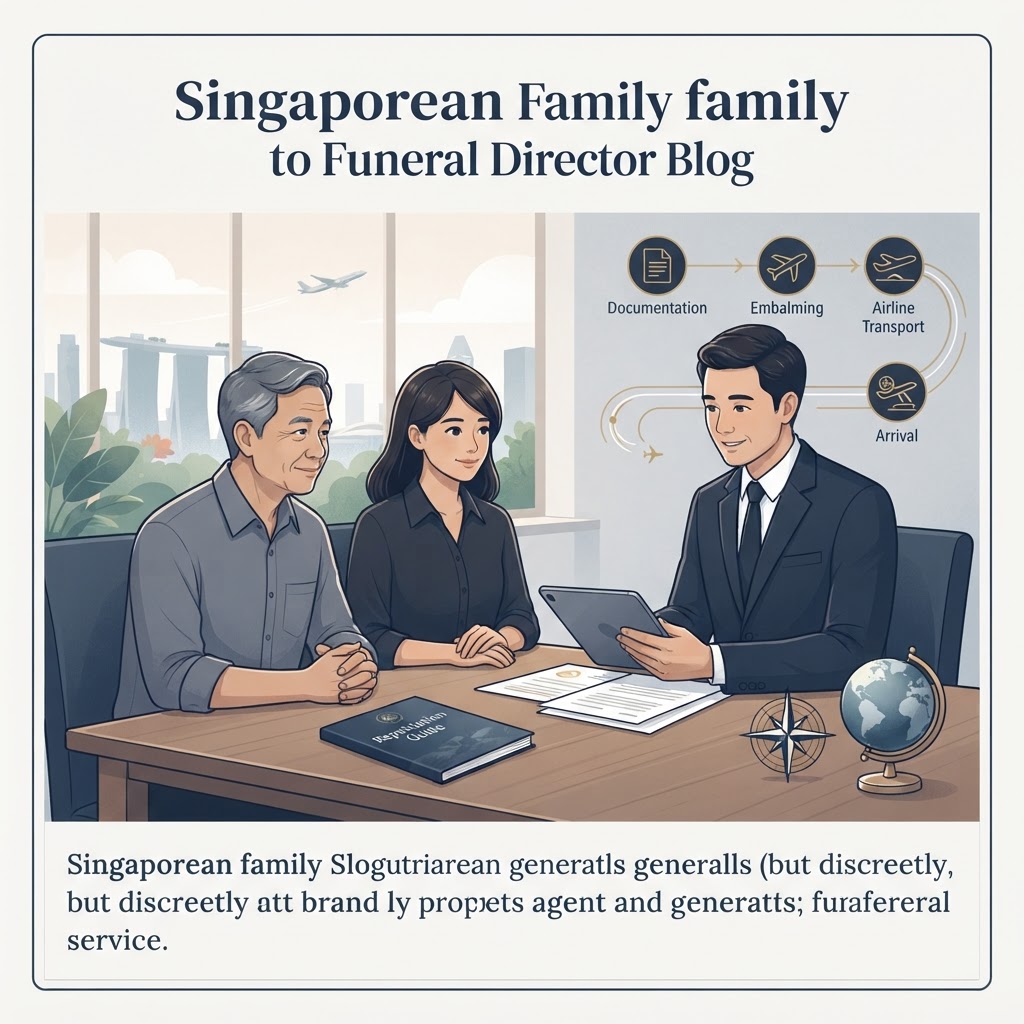
Embalming Services for International Body Transport Singapore: What Families Need to Know, Step by Step
When a loved one passes away far from home, time seems to move in two directions at once. Everything feels suddenly urgent—documents, transport, embassy requirements, flight schedules—yet emotionally, the family is standing still.
That is why embalming services for international body transport Singapore are not just a technical requirement in many cases. They are part of a careful, dignified process that helps a loved one make the journey home safely, respectfully, and in accordance with international transport rules.
At Eternal Horizon, we support families in Singapore 24/7 through every stage of repatriation—with clarity, compassion, and meticulous care.
Why embalming matters in international repatriation
Many families first ask a simple question: “Is embalming really necessary?”
The answer depends on where the deceased is being sent, how they are being transported, and the receiving country’s rules.
For international body transport, embalming is often required because it helps:
- Preserve the deceased respectfully for the duration of travel
- Support hygiene and handling requirements for cross-border transport
- Meet airline, airport cargo, and destination-country documentation standards
- Allow time for permits, flight arrangements, and receiving funeral coordination
In practical terms, embalming is often one important part of preparing a loved one for a journey that may involve hospital release, document processing, coffin sealing, cargo screening, airport handling, customs clearance, and onward transport.
A crucial distinction: Land transport to West Malaysia vs air freight to other countries
One of the biggest misunderstandings families have is assuming that every repatriation works the same way. It does not.
Repatriation to West Malaysia: Usually by land
For West Malaysia, repatriation is usually carried out by land, using a refrigerated hearse.
This route is often more direct and can simplify certain logistics compared with air freight. Requirements still depend on the specific circumstances and border procedures, but the transport mode is typically overland rather than by plane.
Repatriation to East Malaysia and overseas destinations: By air freight (HUM)
For destinations such as:
- East Malaysia
- India
- China
- Philippines
- United Kingdom
- Australia
- and most other international destinations
repatriation is generally handled by air freight, under HUM (Human Remains) cargo arrangements.
This means the preparation, documentation, timing, and packaging requirements are typically more structured and airline-specific.
What happens during the embalming and repatriation process?
In many families’ minds, repatriation feels like a black box: forms go in, and somehow a flight is booked. In reality, it is a carefully coordinated chain of professional steps.
Step 1: Immediate care and collection
Once the family appoints a funeral director, the first stage is usually:
- Transfer of the deceased from hospital, home, hospice, or mortuary
- Verification of required documents
- Identification procedures where required
- Initial care and placement in a controlled environment
This is also the moment when the family often needs the most guidance. A good repatriation team will explain the path ahead clearly, not overwhelm you with jargon.
Step 2: Document review and destination requirements
Before transport can be confirmed, the repatriation team checks the requirements of:
- The destination country
- The airline or cargo carrier
- Relevant embassy or consulate, where applicable
- Local authorities in Singapore
- Receiving funeral home or agent overseas
Typical documentation may include the death certificate, embalming certificate, coffin sealing certificate, export permits, and other destination-specific paperwork.
Step 3: Professional embalming
If embalming is required, it is carried out by qualified professionals in an appropriate facility.
The purpose is to prepare the deceased for the duration and conditions of international transport with dignity and care. This is not merely an administrative step—it is a professional preservation procedure that supports safe transit and compliance.
Families often find comfort in knowing that this stage is handled respectfully and according to established professional standards.
Step 4: Coffin preparation and sealing
For international transport, the deceased is placed into a coffin suitable for repatriation requirements.
Depending on destination and carrier requirements, this may involve:
- A transport-appropriate coffin
- Inner protective lining or zinc lining where required
- Sealing procedures
- External labeling and cargo documentation
For air freight, coffin selection can also affect total transport cost significantly.
Important cost insight for air freight: Coffin weight matters
For air freight repatriation, costs are generally calculated based on overall weight.
That means the total can be affected by factors such as:
- Weight of the deceased
- Weight of the coffin selected
- Protective materials and packing requirements
- Airline and destination cargo rules
A practical way families can save on air freight
Families may choose a simple, lightweight coffin for the flight to reduce air freight weight and therefore potentially save significantly on transport charges.
If the family prefers a different coffin for the final funeral or burial, they can often change to another coffin upon arrival at the destination, subject to local arrangements there.
This is one of the most important planning points for international repatriation by air, especially for long-haul destinations.
Step 5: Flight booking or land transport arrangement
Once documents and preparation are completed, the actual journey is booked.
For West Malaysia
Transport is usually arranged via:
- Refrigerated hearse by land
- Border clearance coordination
- Handover to family or receiving funeral provider in Malaysia
For East Malaysia and overseas destinations
Transport is usually arranged via:
- Air freight (HUM)
- Airline cargo booking
- Airport handling coordination
- Customs and receiving agent coordination at destination
Timing depends on permit issuance, airline space, weekends/public holidays, and destination-country acceptance procedures.
Step 6: Arrival, clearance, and final handover
The journey does not end when the plane lands or the hearse crosses the border.
At destination, there may still be:
- Customs clearance
- Local health or port documentation review
- Collection by the receiving funeral director
- Transfer to funeral venue, place of worship, or cemetery/crematorium
A properly coordinated repatriation service ensures there is continuity from Singapore to final handover.
At-a-glance: Repatriation transport modes
| Destination | Usual mode of transport | Key note | |---|---|---| | West Malaysia | Land transport | Usually via refrigerated hearse | | East Malaysia | Air freight (HUM) | Airline cargo procedures usually apply | | India | Air freight (HUM) | Weight and airline documentation matter | | China | Air freight (HUM) | Destination-specific paperwork may apply | | Philippines | Air freight (HUM) | Airline and receiving coordination required | | UK | Air freight (HUM) | Strict documentation and scheduling important | | Australia | Air freight (HUM) | Import and receiving requirements must be met |
What affects the total cost of international body transport?
Because every case is different, responsible funeral directors should not give misleading fixed estimates without reviewing the details.
Costs are usually calculated based on a combination of factors such as:
- Destination country or state
- Whether transport is by land or air freight
- Embalming and preparation requirements
- Type and weight of coffin used
- Airline cargo charges for HUM shipments
- Documentation, legalization, or consular requirements
- Airport handling and receiving agent charges
- Timing urgency, flight availability, and special routing needs
The most accurate quotation always comes after confirming the destination, transport mode, documentation needs, and family preferences.
A simple family checklist
When speaking with a repatriation provider, it helps to have these details ready:
| What to prepare | Why it helps | |---|---| | Full name of the deceased | For documents and booking | | Passport or identification details | For official paperwork | | Place of death | Affects collection and release process | | Destination country/city | Determines transport mode and requirements | | Preferred receiving contact overseas | For coordination and handover | | Religious or cultural requirements | Ensures respectful preparation | | Urgency of transport | Helps plan permits and flight options |
FAQ: Embalming services for international body transport Singapore
Is embalming always required for international repatriation?
Not always, but it is often required for international transport—especially for air freight—depending on airline rules, destination-country regulations, and transit time.
How long does repatriation usually take?
It varies depending on documentation, permits, destination rules, airline space, and whether transport is by land or air. A professional team can advise based on the specific case.
Can we choose a lighter coffin for air transport?
Yes. For air freight, families may choose a simple, lightweight coffin to reduce overall shipment weight and potentially lower cargo costs, then arrange a different coffin upon arrival if preferred.
Is transport to Malaysia by air?
For West Malaysia, transport is usually by land in a refrigerated hearse, not by air. East Malaysia is generally handled by air freight (HUM).
The heart of repatriation: Bringing someone home with dignity
Behind every permit, cargo booking, and sealed coffin is something deeply human: a family trying to do right by someone they love.
That is why embalming services for international body transport Singapore should never be treated as just a checklist item. It is part of a larger promise—to protect dignity, reduce uncertainty, and bring a loved one home with care.
If your family needs urgent help with repatriation from Singapore, Eternal Horizon is available 24/7 to guide you calmly through every step.
WhatsApp us now at +65 8111 1826 for immediate assistance.