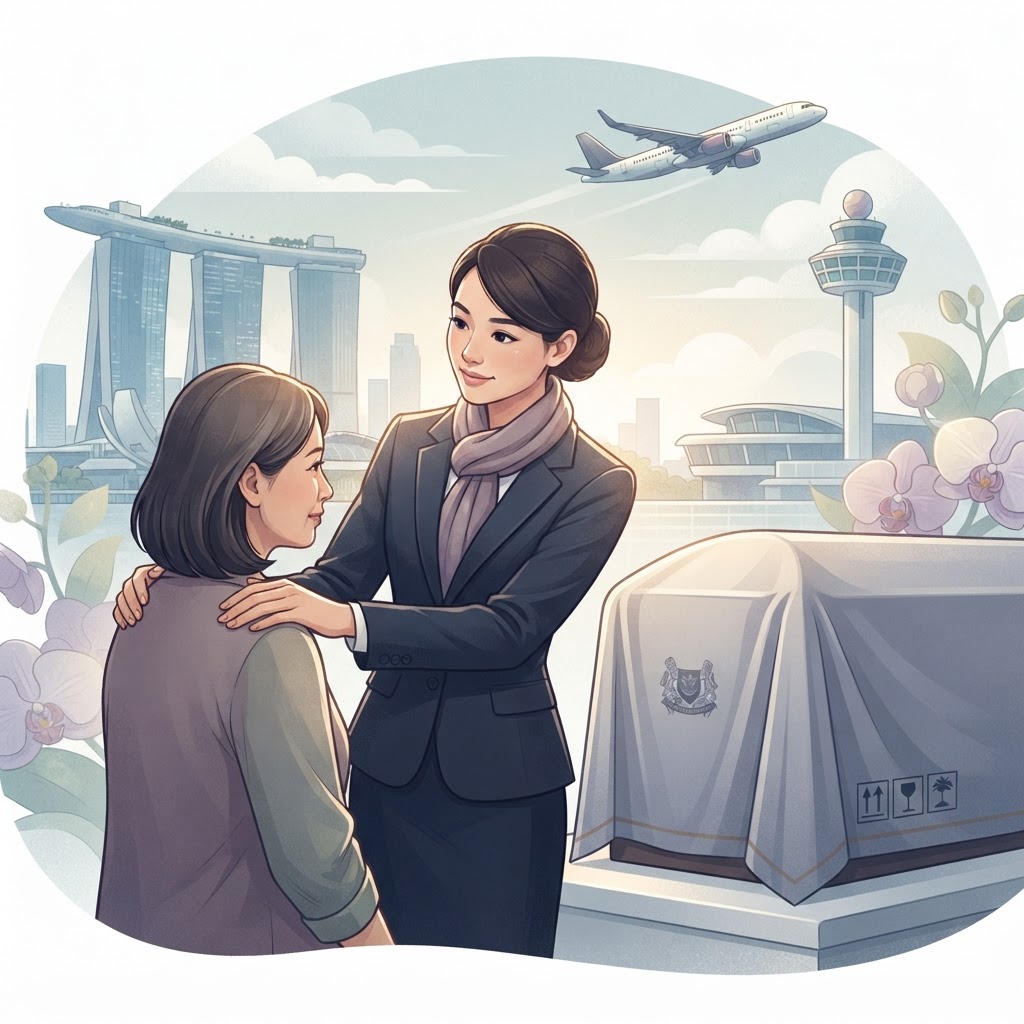
Embalming Services for International Repatriation Singapore: The Essential Guide Families Trust in Difficult Times
When a loved one passes away far from home, time seems to move in two directions at once. Everything feels painfully slow emotionally, yet urgent decisions suddenly need to be made. In those first difficult hours, many families ask one question almost immediately: How do we bring them home with dignity, safely, and without unnecessary delays?
That is where embalming services for international repatriation Singapore become so important.
At Eternal Horizon, we support families through one of life’s most delicate journeys: preparing a loved one for return to their homeland with professionalism, compassion, and meticulous care. Behind every successful repatriation is not just paperwork and transport logistics, but also respectful preparation, careful coordination, and constant communication.
In this guide, we explain exactly how embalming fits into the repatriation process, when land transport is used, when air freight is required, how costs are calculated, and what families can expect step by step.
Why Embalming Matters in International Repatriation
Embalming is more than a technical procedure. In international repatriation, it is often a practical and regulatory necessity.
For many destinations, especially those involving air freight, embalming helps to:
- Preserve the body respectfully during transit
- Meet airline, cargo, and destination-country requirements
- Reduce risks of delay caused by documentation or handling issues
- Allow time for family coordination, religious arrangements, and receiving preparations overseas
- Support viewing opportunities before departure, where appropriate
In simple terms, embalming helps ensure a loved one can travel home with dignity and in a condition suitable for the journey ahead.
The First Critical Distinction: Land or Air?
One of the most important parts of planning a repatriation from Singapore is understanding how the deceased will travel.
Repatriation to West Malaysia: Usually by Land
For West Malaysia, repatriation is typically carried out by land transport using a refrigerated hearse. This is often the most practical and efficient option because of geographic proximity and border accessibility.
This usually means:
- Shorter transit coordination compared with international air cargo
- Careful temperature-controlled transport by road
- Border clearance procedures that must be properly managed
- Documentation still required, though logistics differ from air freight shipments
Repatriation to East Malaysia and Overseas: By Air Freight (HUM)
For East Malaysia, India, China, the Philippines, the UK, Australia, and most other international destinations, repatriation is usually done via air freight, commonly booked as Human Remains (HUM) cargo.
Air repatriation requires stricter preparation and coordination, including:
- Embalming and sealing requirements where applicable
- Airline cargo booking and scheduling
- Coffin and outer case compliance for air transport
- Weight-based freight calculation
- Destination-country import permits or receiving funeral arrangements
This is why experienced handling matters so much: even a minor document mismatch can create painful delays.
What the Embalming and Repatriation Process Usually Looks Like
Every case is unique, but the journey typically follows a structured process.
Step 1: Immediate Collection and Care
Once the family contacts a funeral repatriation provider, the first step is the respectful collection of the deceased from the hospital, home, hospice, or mortuary.
At this stage, the care team will:
- Verify the place of passing and attending procedures
- Arrange transfer into professional care
- Advise the family on immediate next steps
- Begin planning based on destination country requirements
Step 2: Document Review and Repatriation Planning
Before transport can happen, the case must be assessed carefully.
Typical documentation may include:
- Death Certificate
- Embalming Certificate
- Coffin sealing certificate, where required
- Passport or identification of the deceased
- Export permits or health-related clearances
- Import approval or receiving-party details at destination, where applicable
Requirements vary by country, airline, and even transit route.
Step 3: Professional Embalming Preparation
Embalming is carried out by qualified professionals in accordance with applicable procedures and repatriation requirements.
This stage focuses on:
- Sanitary and respectful preservation
- Preparation for the expected duration of transit
- Careful presentation where family viewing is arranged
- Compliance with transport rules and destination expectations
Families are often relieved to learn that embalming for repatriation is handled with great dignity. It is not simply about transport—it is about protecting the loved one’s condition throughout the journey.
Step 4: Coffin Selection and Transport Preparation
For repatriation, coffin selection is not only ceremonial—it can significantly affect logistics.
Important for Air Freight Families: Weight Matters
For air freight destinations, cargo charges are generally calculated based on the overall weight of the shipment.
That means the total weight may include:
- The deceased
- The coffin
- The outer protective case or crate, if required
- Supporting materials used for air transport compliance
Because of this, families should know they often have a practical choice:
A simple, lightweight coffin for the flight can reduce air freight costs significantly.
If preferred, the family may then arrange to change to a different coffin upon arrival in the destination country for the final funeral or burial ceremonies.
This can be a thoughtful way to balance dignity, tradition, and budget without compromising proper care.
Repatriation Timeline at a Glance
| Stage | What Happens | Notes | |---|---|---| | Initial Contact | 24/7 response and case review | Urgent guidance starts immediately | | Collection | Transfer into professional care | From hospital, home, hospice, or mortuary | | Documentation | Permits and certificates prepared | Requirements vary by destination | | Embalming | Preservation and preparation | Especially important for air freight | | Coffin & Packing | Flight or land transport preparation | Weight matters for air shipments | | Dispatch | Land border transfer or airline cargo departure | Scheduled based on approvals | | Arrival Coordination | Receiving party takes over overseas | Local funeral arrangements continue |
Important: Timelines depend on document readiness, embassy or consular requirements, airline schedules, public holidays, and destination-country approvals.
How Costs Are Calculated — Without Misleading Estimates
Families understandably want clarity on cost. However, giving a generic figure for international repatriation can be misleading because every case differs.
Instead of quoting unrealistic flat prices, a professional provider should explain the cost components clearly.
Costs are usually influenced by:
- Destination country
- Whether transport is by land or air freight
- Embalming and preparation requirements
- Coffin type and weight
- Airline cargo charges for HUM shipments
- Documentation, legalization, or consular processes
- Hospital, mortuary, or storage circumstances
- Receiving funeral director arrangements overseas
- Special timing issues such as weekends, public holidays, or urgent departures
A key cost factor for air repatriation
For air freight cases, the shipment weight can make a substantial difference. A heavier coffin often means higher cargo charges.
That is why many families choose:
- A compliant, simple, lightweight coffin for international transport
- A separate ceremonial coffin or casket to be arranged after arrival
This approach is often both practical and cost-conscious.
A Simple Family Checklist
When emotions are overwhelming, a checklist can help.
Prepare these as early as possible:
- Full name of the deceased (as in passport/ID)
- Passport or identification documents
- Known destination city and country
- Family contact person details
- Religious or cultural preferences
- Preferred receiving funeral home, if already known
- Any urgency related to burial, cremation, or ceremonies overseas
Ask your repatriation provider these questions:
- Is this case going by land or by air?
- Is embalming required for this destination?
- What documents are needed for departure and arrival?
- What type of coffin is recommended for transport?
- For air freight, how will weight affect the cargo cost?
- Who will receive the deceased at destination?
FAQ: Embalming Services for International Repatriation Singapore
Is embalming always required for international repatriation?
Not always in every scenario, but it is commonly required or strongly recommended, especially for air freight repatriation and longer transit periods.
Is Malaysia repatriation usually by air?
For West Malaysia, it is usually by land in a refrigerated hearse. For East Malaysia, transport is generally by air freight (HUM).
Can families choose a different coffin after arrival overseas?
Yes. For air repatriation, many families use a simple, lightweight coffin for transport and then arrange a different coffin or casket in the destination country.
How long does repatriation take?
It depends on documentation, approvals, airline schedules, destination-country procedures, and whether transport is by land or air.
The Human Side of Bringing Someone Home
Repatriation is often described as a logistics process. But families know it is much more than that.
It is the final act of love.
It is the promise kept to parents who wished to rest in their homeland, to spouses who wanted to return together to family, to children trying to do the right thing while grieving and overwhelmed.
That is why choosing the right team matters. You need more than transport coordination. You need patient guidance, accurate information, careful preparation, and people who understand that every hour feels personal.
At Eternal Horizon, we provide discreet, professional, and compassionate support for embalming services for international repatriation Singapore, whether your loved one is returning to West Malaysia by refrigerated hearse or traveling by air freight (HUM) to East Malaysia, India, China, the Philippines, the UK, Australia, or other overseas destinations.
Need Immediate Help? We’re Available 24/7
If you need urgent assistance, documentation advice, or immediate repatriation arrangements, contact Eternal Horizon on WhatsApp: +65 8111 1826.
We are here 24/7 to help you bring your loved one home with dignity, care, and clarity.