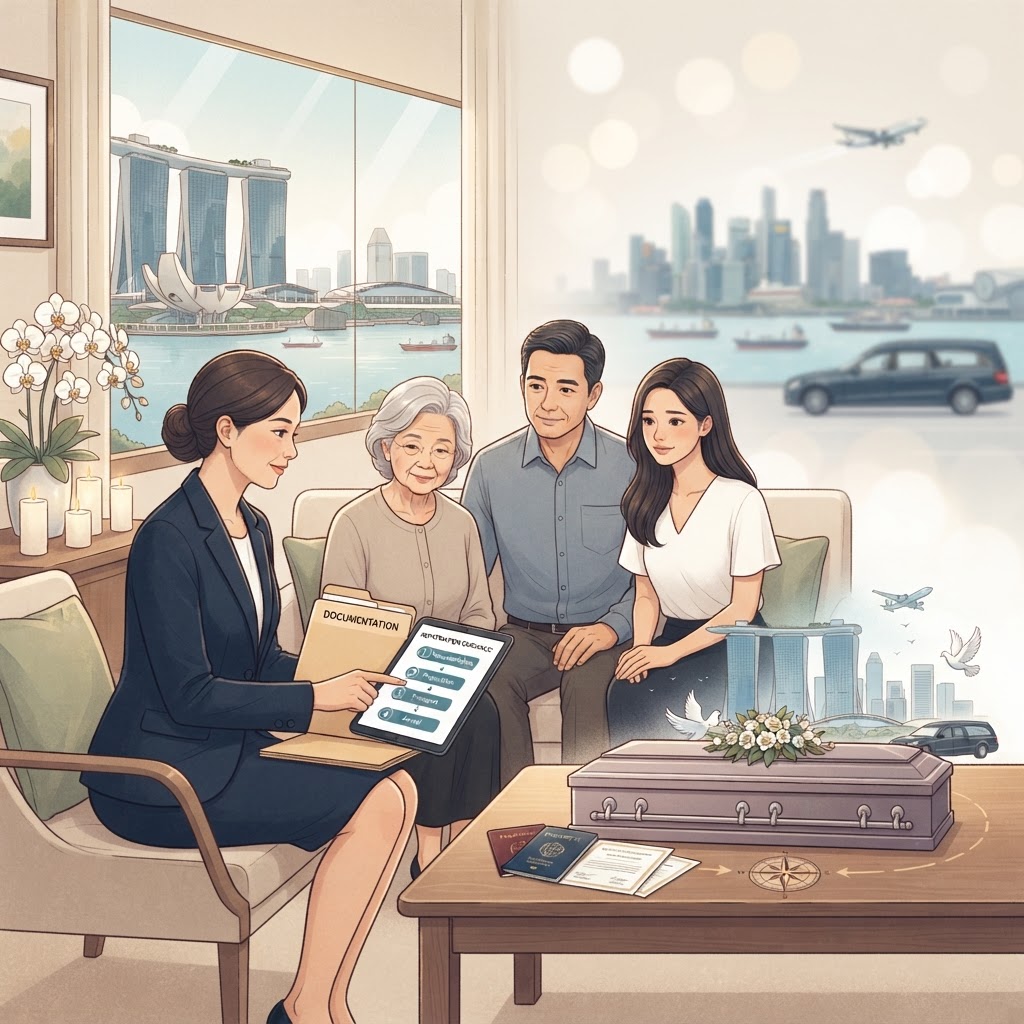
Funeral Home Services for International Repatriation Singapore: A Compassionate Step-by-Step Guide for Families Abroad
When a loved one passes away far from home, time seems to stop—yet suddenly, there are urgent decisions to make.
In those first few hours, many families ask the same questions: What happens next? How do we bring them home? Who handles the paperwork, embassy coordination, and transport? That is where experienced funeral home services for international repatriation Singapore become essential.
At Eternal Horizon, we help families navigate one of life’s most difficult journeys with calm guidance, meticulous planning, and deep respect. International repatriation is not just about transport. It is about care, legal compliance, cultural sensitivity, and protecting a family’s peace of mind when emotions are at their heaviest.
This guide explains the process clearly, compassionately, and accurately—so you know what to expect.
Why International Repatriation Requires Specialist Funeral Support
Repatriation is far more than booking transportation. It is a carefully coordinated process involving:
- Collection and professional care of the deceased
- Documentation and legal permits
- Embalming or other destination-required preparations
- Coffin selection and sealing requirements
- Embassy or consular paperwork where applicable
- Airline cargo booking for air freight destinations
- Border coordination for land transfer destinations
- Timing management to avoid costly or distressing delays
A single missing document or incorrect cargo detail can delay a departure. For grieving families, that can feel overwhelming. A professional repatriation funeral director helps ensure every step is handled correctly, respectfully, and without unnecessary stress.
The First 24 Hours: What Usually Happens
The earliest stage often feels like a blur. Here is what a typical repatriation case from Singapore may involve.
Step 1: Immediate Transfer Into Professional Care
A funeral team arranges the collection of the deceased from:
- Home
- Hospital
- Hospice
- Nursing facility
- Mortuary
The loved one is then brought into proper care while the next steps are planned.
Step 2: Verification of Documents and Destination Requirements
Different countries have different entry requirements. The process depends on factors such as:
- Nationality of the deceased
- Country of final destination
- Whether transport is by land or air
- Local authority requirements
- Embassy or consulate instructions
Step 3: Family Consultation and Repatriation Planning
This is where families receive guidance on the practical and emotional decisions ahead, including:
- Destination arrangements
- Religious or cultural preferences
- Whether there will be a local farewell before departure
- Coffin type for transport
- Timelines for travel clearance
Land or Air? The Most Important Difference Families Should Know
One of the most important parts of funeral home services for international repatriation Singapore is choosing the correct transport mode.
Repatriation to West Malaysia: Usually by Land
For West Malaysia, repatriation is usually carried out by land transport using a refrigerated hearse.
This option is often preferred because it allows for direct cross-border transfer with carefully managed handling. It can also simplify coordination for families receiving their loved one on arrival.
Typical land repatriation support includes:
- Collection in Singapore
- Care preparation and required documentation
- Coordination for cross-border clearance
- Refrigerated hearse transfer into West Malaysia
- Handover to family or receiving funeral team
Repatriation to East Malaysia, India, China, Philippines, UK, Australia, and Other Overseas Destinations: By Air Freight
For destinations such as East Malaysia, India, China, the Philippines, the United Kingdom, Australia, and most other countries beyond Peninsular Malaysia, repatriation is usually done via air freight, commonly handled as HUM (Human Remains) cargo.
This involves highly specific planning, including:
- Airline-compatible coffin preparation
- Documentation checks
- Embalming and sealing requirements where required
- Cargo space booking
- Coordination with receiving agents or family overseas
Because airlines operate under strict cargo and documentation rules, precision matters at every stage.
How the International Repatriation Process Works
Below is a simple view of the usual process.
| Stage | What Happens | Why It Matters | |---|---|---| | 1. Initial Contact | Family contacts the funeral director | Immediate guidance reduces stress and prevents delays | | 2. Transfer Into Care | Deceased is collected and sheltered professionally | Ensures dignity and proper handling | | 3. Document Review | Required certificates and permits are checked | Prevents legal or customs issues | | 4. Preparation | Embalming, dressing, and coffin preparation as required | Meets destination and transport regulations | | 5. Embassy/Airline Coordination | Consular and cargo arrangements are handled if needed | Essential for international clearance | | 6. Departure | By refrigerated hearse or air freight HUM cargo | Safe and lawful transportation | | 7. Arrival Coordination | Receiving party is briefed and prepared | Smooth handover at destination |
Documents Commonly Needed for Repatriation
While requirements vary by destination, families are commonly asked for or assisted with:
- Death certificate
- Permit for removal/export where required
- Embalming certificate where required
- Coffin sealing certificate where required
- Passport or identification of the deceased
- Next-of-kin identification and authorization
- Embassy or consular documents if applicable
- Receiving funeral home or consignee details at destination
An experienced funeral director will advise exactly which documents apply to the destination country.
Understanding Costs: What Families Should Really Know
One of the most common concerns is cost. It is important to be careful here: international repatriation does not have a one-size-fits-all price.
The total cost depends on several factors, such as:
- Destination country and distance
- Whether transport is by land or air freight
- Coffin type and overall shipment weight
- Embalming and preparation requirements
- Airline cargo charges
- Documentation and consular requirements
- Timing, flight availability, and receiving arrangements overseas
Important for Air Freight Destinations
For air freight repatriation, charges are typically calculated based on the overall weight of the shipment.
That means families should know an important practical option:
Choosing a simple, lightweight coffin for the flight can significantly reduce air freight cost.
If the family prefers a different coffin for the final funeral or burial overseas, they may arrange to change to another coffin upon arrival at the destination.
This is often a sensible way to balance dignity, compliance, and cost-efficiency—without compromising proper care.
A Practical Repatriation Checklist for Families
Here is a helpful checklist during the first call:
Prepare These Details if Possible
- Full name of the deceased
- Location of the deceased in Singapore
- Nationality
- Destination country and city
- Passport availability
- Name of next of kin
- Religious or cultural requirements
- Whether the destination is West Malaysia or an overseas air freight destination
Ask the Funeral Director About
- Required documents
- Whether embalming is needed
- Estimated timeline for clearance and departure
- Whether a local wake or private farewell can be arranged
- Receiving arrangements at destination
- Coffin options for air freight weight management
How Long Does Repatriation Usually Take?
Every case is different, but timelines depend on:
- How quickly documents are available
- Embassy or consular processing requirements
- Airline cargo space availability
- Public holidays in Singapore or destination country
- Destination-specific import procedures
Some cases move quickly; others require more coordination. The key is early professional management to avoid preventable delays.
FAQ
Can we hold a viewing or farewell in Singapore before repatriation?
In many cases, yes, depending on timing, preparation requirements, and the destination country’s regulations.
Is embalming always required?
Not always. It depends on the destination country, airline requirements, and method of transport.
Why is West Malaysia usually transported by land instead of air?
Because West Malaysia is typically most practically and efficiently served by refrigerated hearse via land crossing, rather than air freight.
What does HUM mean in air freight?
HUM refers to Human Remains, the airline cargo classification commonly used for transporting the deceased internationally by air.
When Families Need More Than Logistics, They Need Reassurance
At its heart, repatriation is not a cargo exercise. It is a final journey home.
Behind every permit, seal, document, and booking is a family trying to do right by someone they love. That is why the best funeral home services for international repatriation Singapore combine technical expertise with something equally important: human compassion.
At Eternal Horizon, we handle each repatriation with dignity, discretion, and heartfelt care—whether your loved one is returning to West Malaysia by refrigerated hearse or travelling onward by air freight HUM to East Malaysia, India, China, the Philippines, the UK, Australia, or beyond.
If you need immediate help, message Eternal Horizon on WhatsApp at +65 8111 1826 for 24/7 assistance. We are here to guide you, every step of the way.