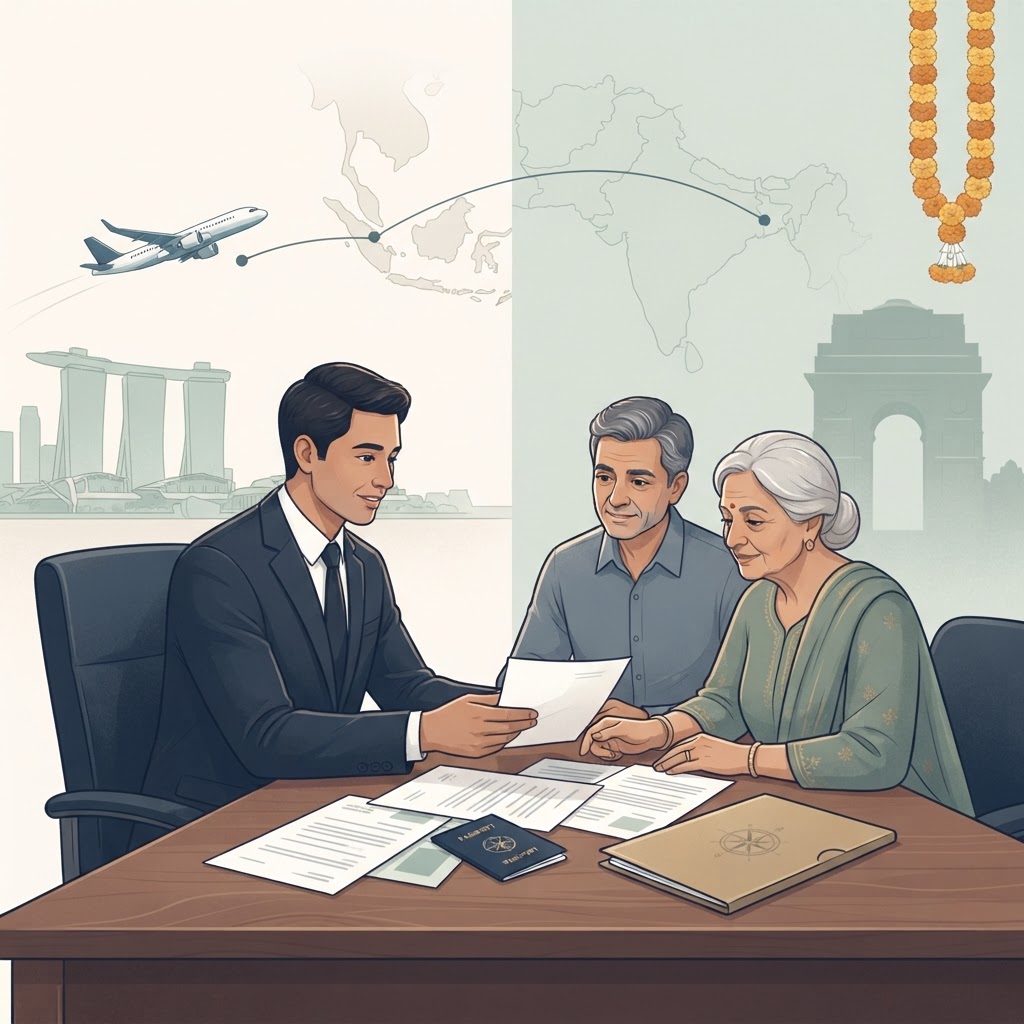
Repatriating a Deceased Loved One from Singapore to India: The Process, Paperwork & What Families Should Expect
When a death happens far from home, time seems to move in two directions at once. One part of the family is grieving. Another part suddenly has to think about documents, embassy requirements, flight space, and how to bring a loved one back to India with dignity.
That is where compassionate professional guidance matters most.
At Eternal Horizon, we help families navigate the repatriating deceased loved one from Singapore to India process with care, precision, and 24/7 support. While every case is unique, the journey usually follows a clear path—and understanding that path can bring a little calm during an overwhelming time.
Why repatriation from Singapore to India requires careful coordination
Many families are surprised to learn that international repatriation is not just “booking a flight.” It is a carefully coordinated process involving:
- Medical certification
- Official death registration
- Embalming and coffin preparation
- Consular or embassy paperwork, where required
- Airline cargo acceptance rules
- Arrival coordination in India
Because India is an air freight destination from Singapore, repatriation is typically carried out as HUM cargo—the airline code used for the transportation of human remains.
Important distinction: Repatriation from Singapore to West Malaysia is usually by land transport in a refrigerated hearse, while repatriation to India, East Malaysia, China, the Philippines, the UK, Australia, and similar destinations is usually by air freight (HUM).
The step-by-step process: Singapore to India
Below is the usual process for transporting a deceased loved one from Singapore to India.
1. Immediate care and transfer of the deceased
The first priority is respectful transfer into professional care.
Depending on where the death occurred—hospital, home, hospice, or another setting—the deceased is usually transferred to a funeral care facility. At this stage, the family also decides whether they would like:
- A direct repatriation
- A brief wake or visitation in Singapore before departure
- Religious or cultural rites before travel
2. Death certification and official registration
Before repatriation can begin, the death must be formally documented in Singapore.
This generally includes:
- Medical certification of the death
- Official death registration with the relevant Singapore authorities
- Issuance of the death certificate and supporting documents required for export
The exact documents needed can vary depending on the circumstances of the death and the destination requirements in India.
3. Embalming and coffin preparation for air transport
For transport from Singapore to India, the deceased will typically need to be:
- Embalmed by a licensed embalmer
- Placed into a coffin suitable for international air transport
- Properly sealed in compliance with airline and destination-country requirements
This is one of the most important steps in the repatriating deceased loved one from Singapore to India process, because airlines have strict cargo acceptance conditions.
4. Documentation for export and consular processing
International repatriation requires careful document handling. Depending on the case, the paperwork may include:
- Death certificate
- Embalming certificate
- Coffin sealing certificate
- Export permit or related clearance documents
- Passport or identification of the deceased
- Consular or embassy documentation, if required
- Receiving party details in India
A professional repatriation team will review each document closely to reduce the risk of delays.
5. Airline booking as human remains cargo (HUM)
Once documentation and preparation are complete, the shipment is booked with an airline as human remains cargo.
This is not the same as buying a passenger ticket. Cargo space must be confirmed, flight schedules must align, and airlines may have different acceptance cut-off times and document rules.
A crucial cost-saving point for families
For air freight destinations such as India, airlines generally calculate cargo charges based on overall weight.
That means the coffin choice can make a meaningful difference.
Families may choose:
- A simple, lightweight coffin for the flight from Singapore, which can help reduce air freight cost
- A different coffin or final casket arrangement after arrival in India, if preferred for local funeral customs or ceremonies
This is often one of the most practical and overlooked ways to manage repatriation expenses without compromising dignity.
6. Arrival clearance and handover in India
After the flight lands, the receiving agent or family-appointed party in India typically handles:
- Cargo collection procedures
- Customs or local authority clearance, where applicable
- Transfer from airport to funeral home, residence, or place of final rites
Because procedures can vary by airport and state in India, advance coordination is essential.
Typical timeline: How long does the process take?
Every case is different, but many families understandably ask how quickly repatriation can happen.
| Stage | What happens | Typical timing | |---|---|---| | Initial arrangements | Transfer into care, family consultation, first document review | Same day | | Documentation phase | Death registration, certificates, export paperwork | Usually 1–2 days | | Preparation phase | Embalming, coffin preparation, sealing | Usually within 1 day after documents are ready | | Flight booking | Cargo space confirmation and airline acceptance | Depends on airline schedule and space | | Arrival in India | Clearance and release to receiving party | Varies by airport and local procedures |
Important: Public holidays, embassy closures, late-night flight schedules, incomplete documents, or special case reviews can affect the timeline.
Checklist: What families should prepare
To make the process smoother, families should be ready to provide as much of the following as possible:
| Family checklist | Why it matters | |---|---| | Deceased’s passport or ID | Needed for identity verification and paperwork | | Next-of-kin identification | Required for authorization and coordination | | Contact details of receiving family in India | Needed for arrival arrangements | | Preferred destination airport/city in India | Helps determine routing and receiving logistics | | Religious or cultural preferences | Important for respectful preparation | | Clothing/photo instructions, if any | Helps personal preparation before departure |
If some items are not immediately available, a professional repatriation provider can advise on alternatives or next steps.
How repatriation costs are calculated
Families often ask for pricing right away, which is understandable. However, giving a fixed number too early can be misleading because each repatriation depends on multiple variables.
Instead of a one-size-fits-all figure, costs are generally calculated based on:
- Place of death and transfer arrangements in Singapore
- Type of care facility and holding duration
- Embalming and preparation requirements
- Type and weight of the coffin used for air transport
- Airline cargo charges for HUM air freight, often based on overall weight
- Documentation and permit requirements
- Embassy or consular processing, where required
- Destination airport in India and onward local arrangements
- Any special religious, ceremonial, or family requests
This is why a clear case assessment is the fairest way to provide accurate guidance.
Frequently asked questions
Can we hold a wake in Singapore before sending the deceased to India?
Yes, in many cases a short wake or private visitation can be arranged before repatriation, subject to timing and documentation requirements.
Is repatriation to India done by land or air?
From Singapore to India, repatriation is typically by air freight (HUM).
Can we reduce air freight cost without compromising dignity?
Yes. Because air freight charges are usually based on overall weight, choosing a simple, lightweight coffin for the flight can help reduce cost. If desired, the family may arrange a different coffin or casket after arrival in India.
How fast can the process begin?
Immediately. Once the family contacts a professional repatriation team, transfer into care and document guidance can usually start right away.
A final word for families facing the unexpected
No family plans for a loss away from home. Yet in the middle of shock and sorrow, one deeply human wish becomes clear: to bring your loved one home safely, respectfully, and without unnecessary complications.
The repatriating deceased loved one from Singapore to India process may seem daunting at first, but with the right guidance, it becomes a carefully managed journey—one handled with compassion, compliance, and dignity at every step.
If you need immediate 24/7 assistance, contact Eternal Horizon on WhatsApp: +65 8111 1826. We are here to guide your family through every stage with professionalism, clarity, and care.