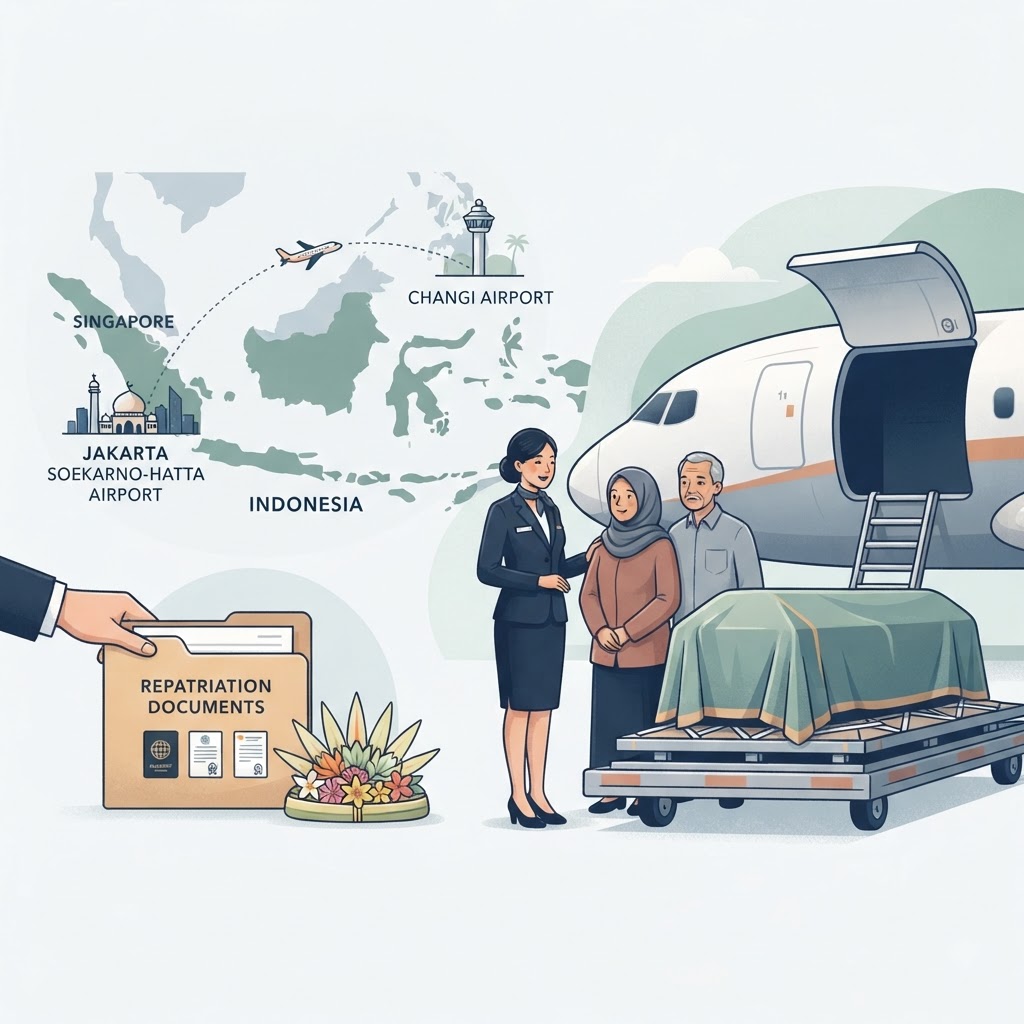
Repatriation of Human Remains Singapore to Indonesia Procedure: A Compassionate Step-by-Step Guide for Families
When a loved one passes away far from home, time suddenly feels different. Every phone call matters. Every document feels urgent. And in the middle of grief, one question often rises above all others: How do we bring them home with dignity, safely, and correctly?
If you are searching for the repatriation of human remains Singapore to Indonesia procedure, this guide is here to give you calm, reliable clarity. At Eternal Horizon, we know this is never “just paperwork.” It is a final journey—one that deserves precision, respect, and gentle care at every stage.
For Indonesia, repatriation from Singapore is typically arranged by air freight. That means the process involves medical certification, government documentation, coffin preparation to airline standards, cargo booking, and coordination with receiving parties in Indonesia. It sounds overwhelming at first—but with an experienced repatriation team, it can be managed smoothly and respectfully.
Why the Procedure Matters More Than Most Families Expect
International repatriation is not the same as a local funeral transfer. Each country has its own entry rules, document expectations, and handling requirements. Even a small mismatch in names, passport details, or paperwork sequence can cause delays.
That is why a professional repatriation service does more than arrange transport. We help families by:
- Coordinating the full process from hospital, home, or mortuary in Singapore
- Advising on Indonesian receiving requirements
- Preparing the deceased for international transfer with dignity
- Managing documentation and airline cargo procedures
- Supporting the family emotionally while urgent logistics are handled
In short: the goal is not just to move the deceased. The goal is to bring them home properly.
Singapore to Indonesia: Is It by Land or by Air?
This is one of the most common points of confusion.
Repatriation to Indonesia is Usually by Air Freight (HUM)
Because Indonesia is overseas, repatriation of human remains from Singapore is generally handled as air freight, often coded by airlines as HUM (human remains).
Important Transport Distinction
To help families understand the wider context:
- West Malaysia: repatriation is usually by land transport, typically using a refrigerated hearse.
- East Malaysia, Indonesia, India, China, Philippines, UK, Australia, and other overseas destinations: repatriation is generally by air freight (HUM).
This distinction matters because air repatriation has different documentation, packaging, cargo handling, and airline requirements compared with overland transfer.
Step-by-Step: Repatriation of Human Remains Singapore to Indonesia Procedure
1. Immediate Registration and Initial Care
The first step is the legal registration of the death in Singapore and the proper transfer of the deceased into professional care.
Depending on where the passing occurred—hospital, home, or another location—the procedure begins with:
- Medical certification of death
- Official death registration in Singapore
- Transfer to a funeral facility or mortuary
- Identification and family authorisation
At this stage, the family will also decide whether the deceased will be viewed in Singapore before departure, and whether any religious rites or prayers should be arranged.
2. Document Collection for International Repatriation
For the repatriation of human remains Singapore to Indonesia procedure, documentation is central. Requirements can vary by case, but commonly include:
- Death certificate issued in Singapore
- Passport or identification details of the deceased
- Next-of-kin or authorised applicant identification
- Embalming certificate
- Coffin sealing certificate or related preparation certification
- Export or transit-related permits as required
- Airline cargo documentation
- Receiving-party details in Indonesia
- Any Indonesian consular or local authority requirements applicable to the case
A professional repatriation director will verify that names, passport numbers, and dates match exactly across all documents.
3. Embalming and Preparation for Air Transport
For international air transfer, the deceased is usually prepared according to airline and destination requirements.
This often includes:
- Professional embalming
- Hygienic care and dressing
- Placement into a coffin suitable for international transport
- Sealing and documentation for cargo acceptance
Every step is handled with reverence. Families are often relieved to know that preparation is not rushed; it is carried out methodically so that the journey is secure and dignified.
4. Coffin Selection for Air Freight: A Practical Way to Manage Cost
This is an important point many families do not realise.
Because Indonesia repatriation is typically by air freight, the freight portion is usually calculated based on overall weight. That means the coffin choice can significantly affect the final transport cost.
A smart option many families choose
Families may select a simple, lightweight coffin for the international flight to help reduce air-freight weight charges. After arrival in Indonesia, the family can, if they wish, transfer the deceased into a different coffin for local funeral rites or burial traditions.
This approach can be both practical and respectful. It allows the family to control unnecessary freight weight while preserving their freedom to choose a preferred coffin style later at destination.
Important: The suitability of any coffin must still comply with airline, handling, and destination-entry requirements.
5. Airline Booking and Cargo Coordination
Once documents and preparation are complete, the repatriation team arranges the cargo booking.
This includes:
- Selecting a suitable flight route
- Confirming cargo space availability
- Coordinating airline acceptance timing
- Preparing airway bill and cargo documentation
- Scheduling transfer to the airport cargo terminal
Human remains are not handled like standard luggage. Airlines have strict acceptance procedures, cut-off times, and packaging standards. Careful coordination helps prevent unnecessary delays.
6. Arrival Coordination in Indonesia
The process does not end when the flight departs Singapore.
A proper repatriation plan also includes coordination on the Indonesia side, such as:
- Receiving funeral director or local representative
- Customs or local clearance procedures where required
- Collection from airport cargo terminal
- Transfer to funeral home, place of worship, family residence, or cemetery
Because local procedures may differ by airport, province, or municipality in Indonesia, advance coordination is essential.
Typical Timeline: How Long Does It Take?
While every case is different, the process usually depends on document readiness, flight availability, embassy or consular needs where applicable, and receiving arrangements in Indonesia.
| Stage | What Happens | Typical Consideration | |---|---|---| | Initial arrangements | Death registration, transfer into care, family instructions | Usually starts immediately | | Documentation | Certificates, IDs, permits, receiving details | Timing depends on accuracy and completeness | | Preparation | Embalming, dressing, coffin preparation, sealing | Must meet airline and destination requirements | | Cargo booking | Flight confirmation and airport coordination | Depends on airline schedules and cargo space | | Arrival in Indonesia | Clearance and receiving transfer | Varies by airport and local authority procedures |
In many cases, families want a precise number of hours or days. The honest answer is that timelines vary, but an experienced team can often shorten delays by ensuring the paperwork is correct from the beginning.
How Repatriation Costs Are Calculated
Because every case is unique, it would be misleading to quote a standard figure. Instead, families should understand the components that usually affect the total cost:
- Location of collection in Singapore
- Mortuary or care arrangements required
- Embalming and preparation needs
- Type and weight of coffin selected
- Airline cargo charges for air freight (often weight-based)
- Documentation, permits, and handling requirements
- Flight routing and destination airport
- Receiving arrangements in Indonesia
- Timing factors, such as urgent or after-hours coordination
Key cost insight for air-freight destinations
For Indonesia, East Malaysia, India, China, Philippines, UK, Australia, and other air-freight destinations, the freight cost is commonly influenced by overall weight. This is why choosing a simple, lighter coffin for the flight can significantly reduce the air-freight portion of the expenses.
Family Checklist: What to Prepare
To make the process smoother, families should try to have the following ready:
- Full name of the deceased exactly as per passport or ID
- Passport or identification documents
- Next-of-kin contact details
- Preferred destination city/airport in Indonesia
- Name of receiving family member or funeral provider in Indonesia
- Any religious or cultural preferences for preparation and rites
- Desired timeline, if there is a burial or service date to meet
Even if some of these details are not yet available, a repatriation team can still begin guiding you immediately.
FAQ: Repatriation of Human Remains Singapore to Indonesia Procedure
Do all cases require embalming?
For international air transport, embalming is commonly required or expected to meet airline and receiving-country handling standards. The exact requirement depends on the case and destination rules.
Can the family view the deceased in Singapore before departure?
In many cases, yes, depending on timing, preparation status, and facility arrangements.
Can ashes be sent instead of human remains?
Yes, the procedure for cremated remains is usually different and often simpler than full-body repatriation, though documentation is still important.
Will one mistake in paperwork really cause delays?
Yes. Even minor inconsistencies in names, numbers, or authorisations can disrupt airline acceptance or receiving clearance.
A Final Word for Families Facing the Hardest Call
There is something profoundly human about the desire to bring a loved one home. Behind every certificate, stamp, and cargo booking is a family trying to do one final act of love.
The repatriation of human remains Singapore to Indonesia procedure can feel complex—but you do not have to carry it alone. With the right guidance, it becomes a carefully managed journey of dignity, accuracy, and care.
If you need immediate 24/7 assistance, contact Eternal Horizon on WhatsApp: +65 8111 1826. We are here to help you calmly, respectfully, and urgently—every step of the way.